

Transportation is the artery of progress, connecting remote communities and fueling economic growth while reinforcing the region’s rich cultural tapestry. In Darfur, historic caravan routes and traditional pathways have long served as lifelines, facilitating the movement of people, goods, and ideas. Today, modern transportation initiatives promise to build on this legacy by improving connectivity, reducing isolation, and enabling a more dynamic economic landscape. At Darfur 2030, we document how transport developments are shaping the future of Darfur through innovation and community-driven efforts.
Historical Foundations
Traditional Pathways and Caravans
- Community Mobility: Traditional modes of transport—such as animal-drawn carts and camels—were tailored to the region’s unique geographical challenges. These time-tested practices not only ensured mobility across vast deserts and rugged terrains but also embedded a deep sense of resilience and community reliance.
- Ancient Trade Routes: For centuries, Darfur’s network of caravan routes served as the primary means of transport, linking nomadic communities and vibrant market towns. These pathways enabled the exchange of essential goods like salt, textiles, and handmade crafts, while also facilitating cultural and social interactions.
Modern Transport Infrastructure
Road Infrastructure
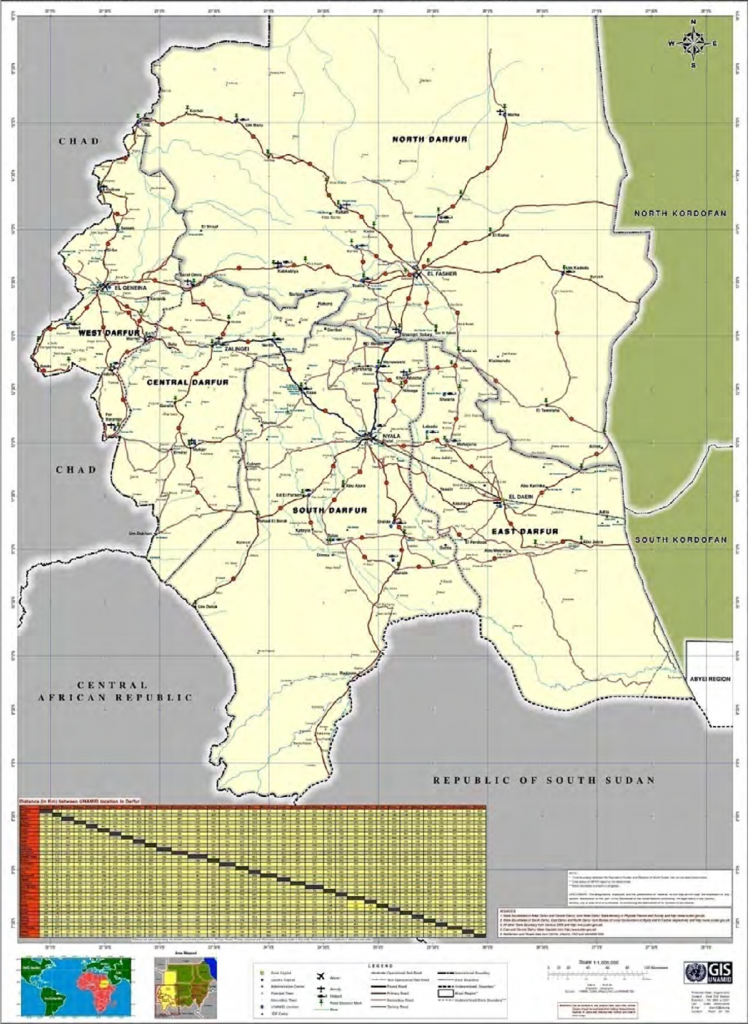
In order to address the problems of geographic isolation, access to markets for agricultural produce, health facilities and poverty reduction, the road sector has to be accorded top priority. Roads are very important for administration and control. Whereas Darfur appears to have an extensive road network, most of it is in a dilapidated state and virtually impassable.
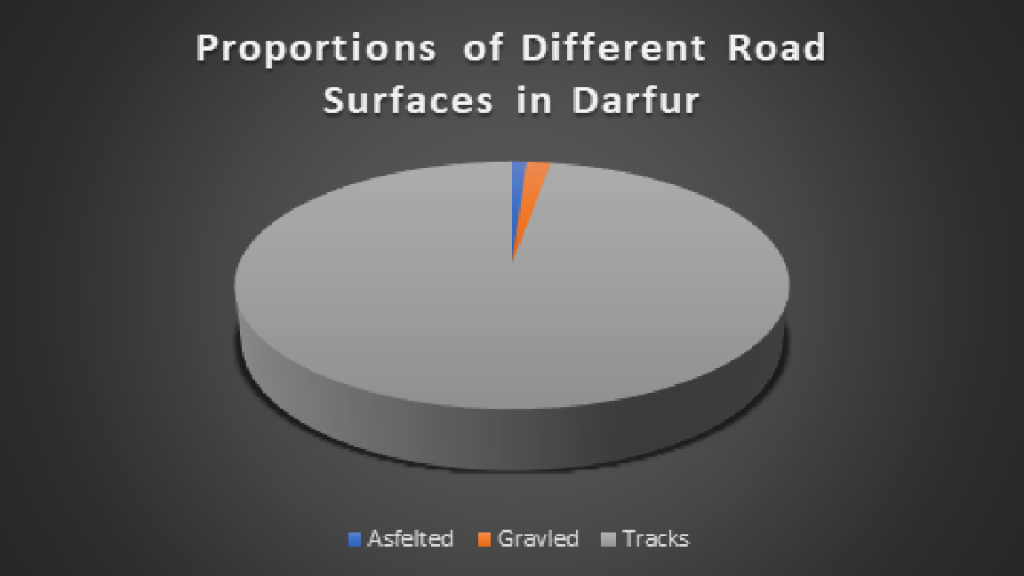
The Situational Analysis and Results Framework undertaken in November, 2012 indicated that the road network in the Darfur region covers over 12,000km. However, only 200km are asphalted and only 100km of the network are graveled, while over 10,000km remain in a state of disrepair. Proportions of Different Road Surfaces in Darfur existing as tracks, which become virtually unusable espacialy during the rainy seasons. This sad state of affairs is diagrammatically depicted, which shows that only 1.7% of the road network in Darfur is paved; about 1% is graveled, while tracks comprise 97.3 % of the network.
The road systems in Darfur are in a dilapidated state of repair and require major rehabilitation or reconstruction. The situation is not helped by the fact the Sudanese goverment was always responsible for the development and management of the national highway network, and the Darfur State Governments are responsible for inner state roads, as they are faced with severe financial, human and technical capacity constraints. Furthermore, private sector is not yet fully developed to take on road construction and maintenance tasks, in addition to the prevailing insecurity which further complicated matters.
The road systems in Darfur are in a dilapidated state of repair and require major rehabilitation or reconstruction. The situation is not helped by the fact the Sudanese goverment was always responsible for the development and management of the national highway network, and the Darfur State Governments are responsible for inner state roads, as they are faced with severe financial, human and technical capacity constraints. Furthermore, private sector is not yet fully developed to take on road construction and maintenance tasks, in addition to the prevailing insecurity which further complicated matters.
Civil Aviation Infrastructure
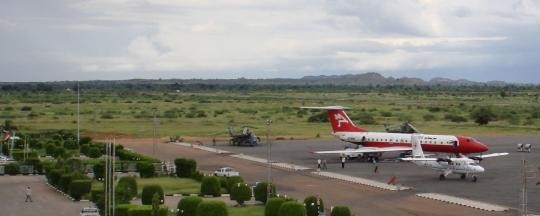
The main airports in Darfur are located in Nyala (South Darfur), El Fasher (North Darfur) and El Geneina (West Darfur), with the first two being designated as international airports. In addition, there are seven mini-airports located in Kutum, Kabkabia, Al Lait, Hashkna, Buram, Garsila and Njama. These mini-airports are rarely used at the moment and as such their upgrading should only be considered in the long term, when the level of economic activities in Darfur will have escalated. However, of immediate concern is the lack of functional airstrips/airports in the capitals of the two newly created states, namely: Ed Daein (East Darfur) and Zalingei (Central Darfur). These towns are now only accessible from other regional towns by helicopter flights, as most of the roads are virtually impassable. Besides improving the road links, the development of airports for these two cities should also be a priority.
The demand for air transport services at major airports in Sudan including those in Darfur in the post-conflict period has been projected to grow tremendously over the next five years and beyond. It is anticipated that demand will not only be determined by commercial orientations and or trade, but also by the needs of peace-keeping operations, support to relief and recovery operations, the return of IDPs, and urgent rehabilitation works involved in economic development activities.
Rail Transport
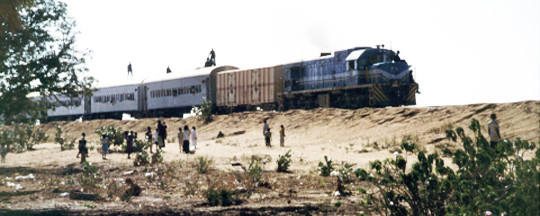
Rail transport is considered to be the third most important mode of transport in Darfur after road transport and air transportation, although it is rather limited in geographic coverage. The only existing rail link with Darfur runs from Babanousa in West Kurdufan State to Nyala in South Darfur. This rail line is the only land access route available all year round to provide transport for goods, people and livestock to and from Darfur’s vast region under reasonably safe and secure conditions. However, this single (1067mm gauge) line of approximately 375 km has been in a dilapidated condition due to lack of maintenance, but is currently undergoing rehabilitation.
Generally speaking, the entire Sudan rail system has experienced a decline in traffic, partly due lack of resources for track maintenance and repair and partly due to competition from road transport. The rail traffic market share declined from 33% in 1997 to 25% in 2000 and to only 6% in 2005. As a consequence, about one third of the main lines of the Sudan rail network under the Sudan Railways Corporation (SRC), totaling 4,578km, are reported to have been closed.
Evolving Networks and Technologies
As Darfur moves into the modern era, the evolution of transportation is playing a pivotal role in shaping social and economic development:
- Road Development: Investment in the construction and rehabilitation of roads is transforming how communities interact. Paved highways, improved gravel roads, and bridges across key waterways are reducing travel time, cutting transportation costs, and opening up once-isolated areas to broader markets.
- Public Transit and Community Transport: New initiatives in public transportation—ranging from minibus services to community-managed transport cooperatives—are improving accessibility, especially for rural populations. These services not only foster economic inclusion but also enhance access to healthcare, education, and employment opportunities.
- Digital Integration: Advances in communication technologies have led to the development of GPS-based navigation and digital mapping services. Such tools enhance transport planning, improve route efficiency, and help local drivers access maintenance and safety information in real time.
Challenges in the Transport Sector
Overcoming Barriers for Sustainable Mobility
While progress is evident, several challenges continue to influence the transport landscape:
- Infrastructure Gaps: Vast distances, harsh terrains, and seasonal weather variations can impede the construction and maintenance of reliable transport networks. Addressing these issues requires thoughtful planning and investment in adaptable infrastructure solutions.
- Investment and Funding: Limited public funds and competing development priorities sometimes slow progress, highlighting the need for targeted investments and innovative public-private partnerships that can mobilize additional resources.
- Safety and Accessibility: Improving road safety and ensuring that vulnerable populations benefit from modern transport systems remain critical issues. Initiatives geared toward driver education, maintenance of infrastructure, and community engagement are key to making transport safer and more inclusive.
Future Pathways and Innovations
Embracing a Vision of Connected Progress
Looking forward, the prospects for transport development in Darfur are both promising and transformative:
- Integrated Transport Systems: Developing an integrated transport network that connects rural and urban centers is essential for inclusive growth. This includes linking regional corridors with digital platforms to enhance scheduling, logistics, and accessibility.
- Green and Resilient Mobility: With a focus on sustainability, future projects may integrate renewable energy solutions—such as solar-powered transportation hubs or electric public transit options—to reduce environmental impact while maintaining operational efficiency.
- Community-Driven Approaches: Empowering local communities to participate in the planning, implementation, and management of transport systems ensures that projects reflect the real needs of the people. Community-based solutions, backed by technical training and digital resources, can drive the development of responsive and resilient transport networks.
The evolution of transport in Darfur is a testament to resilience and adaptation—a journey from ancient caravan trails to modern highways and digital mapping systems. By investing in infrastructure, fostering innovation, and emphasizing sustainability, Darfur is poised to transform its transport sector into a catalyst for economic growth, social inclusion, and regional connectivity. At Darfur 2030, we remain committed to documenting these advancements, highlighting success stories, and exploring new avenues for progress that will guide Darfur on a path toward a more connected future.