

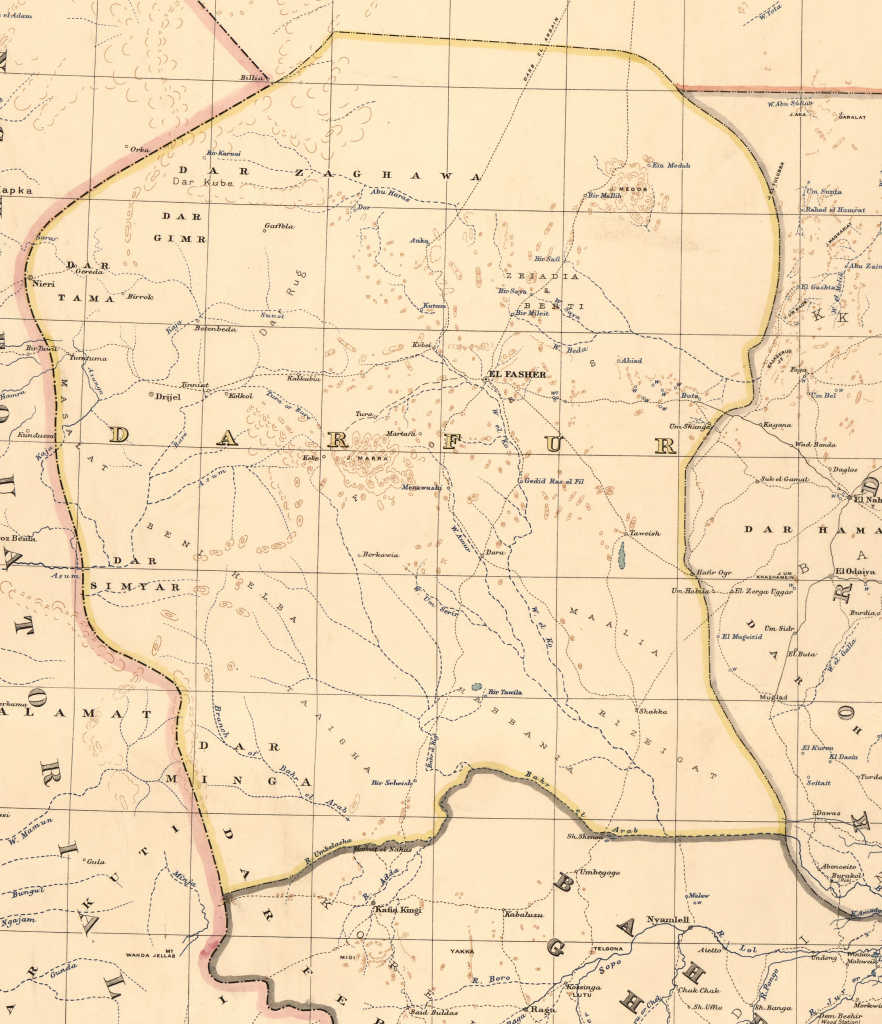
The Sultanate of Darfur was a pre-colonial state in present-day Sudan. It existed from the 17th century to 24 October 1874, when it fell to the Sudanese warlord Al-Zubayr Rahma Mansur, and was reestablished again from 1898 to 1916, until it was conquered by the British. At its peak in the late 18th and early 19th century it stretched all the way from Darfur in the west to Kordofan and the western banks of the White Nile in the east, giving it the size of present-day Nigeria.
The Sultanate of Darfur emerged as a formidable polity that integrated indigenous cultural traditions with Islamic principles. As one of the longest-lasting states in the region, it served as both a political and cultural hub, linking trans-Saharan trade, regional power dynamics, and a fluid network of neighboring states. Its influence extended from governance and law to art, architecture, and religious life—an impact still evident in the socio-cultural legacy of modern Darfur.

Origins and Formation
The establishment of the Sultanate of Darfur is commonly placed in the early modern era, building on the foundation laid by earlier polities such as the Tunjur Kingdom. Several factors contributed to its rise:
- Ethnic and Cultural Synthesis: The Sultanate’s formation was marked by the amalgamation of indigenous traditions with incoming Islamic influences. Local groups, particularly among the Fur ethnic community, embraced Islam not only as a spiritual guide but also as a framework for governance and legal administration.
- Environmental and Economic Catalysts: Darfur’s strategic position—situated between the more established Nile Valley states and sub-Saharan regions—favored the growth of a centralized state. Favorable climatic conditions in certain periods encouraged settled agriculture and pastoralism, while the proximity to trans-Saharan trade routes provided economic opportunities that spurred state consolidation.
- Political Innovation: Leaders in the emerging Sultanate capitalized on both local legitimacy and Islamic ideals, cementing their authority through religious ceremonies, dynastic rituals, and the construction of monumental centers that underscored their power.
These converging dynamics allowed the Sultanate to consolidate power over a diverse and often challenging environment, setting the stage for a centralized state that would endure for centuries.
Political and Administrative Structure
Centralized Monarchy
At its core, the Sultanate of Darfur was governed by a centralized authority vested in a Sultan. The Sultan was not only the political leader but also served as an important religious symbol. His legitimacy was derived from:
- Divine Sanction: Claiming both spiritual and temporal authority, the Sultan often invoked Islamic principles and ancestral traditions to justify his rule.
- Dynastic Continuity: Succession typically followed established family lines, reinforcing the legitimacy of the ruling elite through time-tested traditions.
Administrative Institutions
Beneath the Sultan, an intricate bureaucracy evolved to manage state affairs, including:
- Local Governance: Provincial or district governors were appointed to oversee regional affairs, collect taxes, administer justice, and maintain local order.
- Judicial Systems: The integration of Islamic law with indigenous customary practices created a unique judicial framework. Courts and legal assemblies helped resolve disputes, ensuring that central directives reached local communities.
- Record Keeping and Communication: Although written records were not continuously extensive, administrative practices were bolstered by oral traditions and, where available, Arabic script for official correspondence and treaty documentation.
This administrative framework allowed the Sultanate to efficiently manage resources, secure trade routes, and organize defense against external threats.

Economic Foundations and Trade Networks
Agricultural and Pastoral Economy
The Sultanate’s economic base was multifaceted:
- Agriculture: In fertile regions of the state, the cultivation of cereals such as millet and sorghum supported local communities. Seasonal cycles dictated agricultural yields, which in turn influenced political stability.
- Pastoralism: The raising of livestock complemented agricultural production, with nomadic and semi-nomadic groups playing key roles in both local subsistence and trade.
Trade and Economic Exchange
Darfur’s geographic position allowed the Sultanate to flourish as a center for commerce:
- Trans-Saharan Trade: Situated along important overland routes, the state capital and regional markets became hubs for the exchange of goods such as gold, leather, textiles, and gum arabic.
- Regional Specialization: The blend of local crafts and imported goods helped integrate Darfur into a broader economic ecosystem. Artisans produced ceramics, metalwork, and textiles that not only met local demand but also found markets in neighboring regions and beyond.
- Infrastructure Investments: The construction of fortified trade centers, caravan stations, and administrative outposts ensured that commerce could be conducted securely even in a challenging environment.
Cultural and Religious Life
Religious Syncretism and Islamic Influence
Religion was a cornerstone of the Sultanate’s identity:
- Islamic Institutions: The rapid adoption of Islam facilitated the development of educational institutions, mosques, and religious courts. This not only enhanced the Sultan’s legitimacy but also fostered a shared cultural and moral framework.
- Syncretic Practices: While Islam played a central role, the Sultanate also retained elements of pre-Islamic traditions, blending indigenous rituals with Islamic celebrations. This syncretism can be observed in festivals, funerary practices, and local art.
Artistic and Architectural Achievements
The cultural vibrancy of the Sultanate was reflected in its artistic and material output:
- Architecture: Fortified palaces, grand mosques, and communal centers were constructed using locally sourced materials. These buildings often featured intricate geometric designs and calligraphy that linked Darfur’s visual language to broader Islamic artistic traditions.
- Craftsmanship: Pottery, textiles, and metalwork from the period exhibit both indigenous techniques and borrowed motifs. This cross-cultural exchange enriched the aesthetic landscape of Darfur and underscored the Sultanate’s role as a cultural crossroads.
- Oral and Written Traditions: The preservation of history through oral narratives, poetry, and early forms of writing provided continuity and a record of political and religious life, allowing the Sultanate’s influence to be transmitted through generations.
- Patronage of the Arts: The royal court became a center of artistic patronage. Master craftsmen, poets, and scholars received support to create works that celebrated heroic narratives, spiritual devotion, and the natural beauty of the land.

Military and Diplomatic Relations
Defensive Strategies and Military Organization
Surrounded by challenging terrain and rival powers, the Sultanate developed robust military strategies:
- Fortifications and Garrisons: The construction of defensive walls, fortified trade posts, and strategic outposts helped secure key regions against raiders and potential invaders.
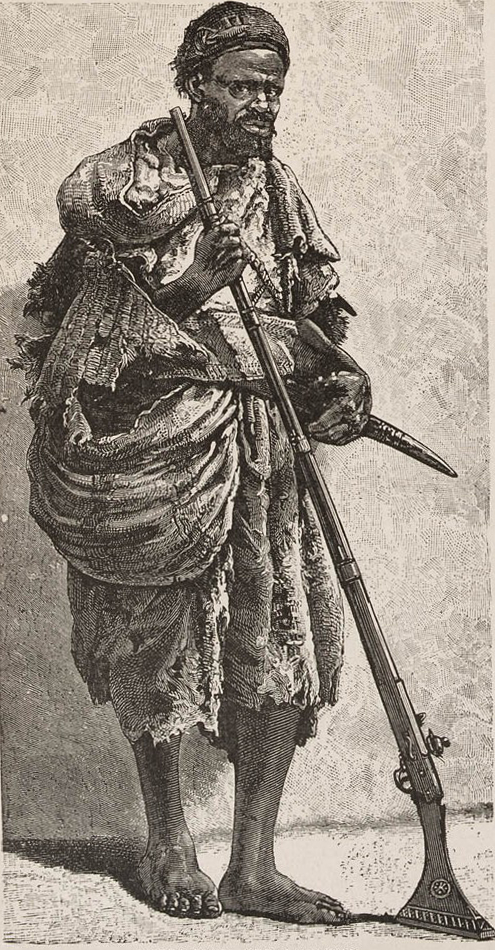
- Cavalry and Infantry: The Sultanate’s army was organized to include both mobile cavalry units—essential for rapid communication and raids—and foot soldiers for defending fixed positions.
- Military Technology: Adaptation of both indigenous warfare techniques and technological innovations acquired through trade (such as metal weaponry) enhanced the Sultanate’s defensive capabilities.
Diplomatic Outreach
The Sultanate maintained active diplomatic relations with neighboring states:
- Regional Alliances: Marital alliances, trade agreements, and mutual defense pacts connected Darfur with states in the Nile Valley, the Sahel, and even parts of North Africa.
- Conflict and Negotiation: While the Sultanate often resorted to military force to safeguard its interests, it also engaged in diplomacy to resolve border disputes and foster economic cooperation.
- Cultural Exchanges: Diplomatic ties helped facilitate the exchange of ideas, religious teachings, and artistic styles, reinforcing Darfur’s position within a dynamic network of African states.
Decline and Transformation
Internal and External Pressures
Over the centuries, the Sultanate of Darfur encountered significant challenges:
- Shifting Trade Routes: The evolution of regional trade networks, along with environmental changes that altered agricultural and pastoral patterns, weakened the economic foundation of the Sultanate.
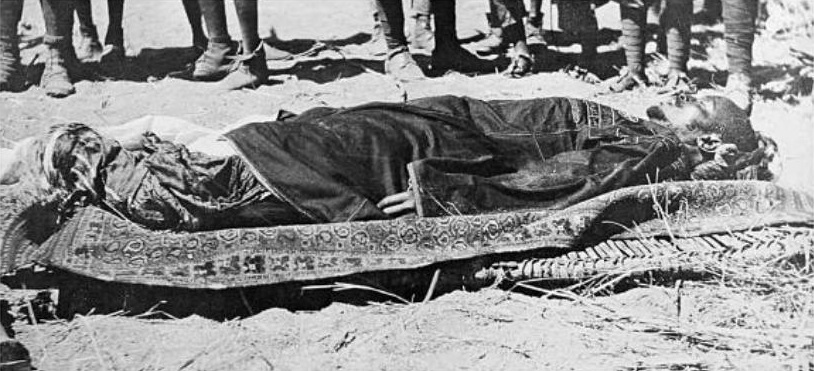
- Political Fragmentation: Internal divisions, succession disputes, and regional rivalries eventually eroded the centralized power that had long sustained the state.
- External Confrontations: In later centuries, the encroachment of external forces—including rising regional powers and the eventual incursion of colonial interests—further destabilized the Sultanate’s authority.
Transition Under Colonialism
By the late 19th and early 20th centuries, the Sultanate’s traditional power structures were systematically dismantled:
- Colonial Reorganization: The advent of European colonial rule—most notably under the Anglo-Egyptian administration in Sudan—reshaped political boundaries and institutional frameworks.
- Cultural Legacy: Despite its political decline, the cultural and social influences of the Sultanate persisted, influencing administrative practices, local governance, and community identities in modern Darfur.

Legacy and Historical Significance
The Sultanate of Darfur remains a pivotal reference point for understanding the region’s historical trajectory:
- Cultural Identity: The fusion of Islamic principles and indigenous traditions established a model of governance and social life that has echoes in modern Darfur’s cultural identity.
- Political Lessons: The Sultanate’s experience with centralized authority, bureaucratic administration, and regional diplomacy offers valuable lessons in statecraft and resilience.
- Archaeological and Oral History: Today, ruins of architectural marvels, artifacts of craftsmanship, and rich oral traditions continue to generate scholarly interest, offering insights into the Sultanate’s societal organization and its influence on later political entities in Sudan.
- Historical Memory: Archaeological sites, preserved monuments, and local oral histories provide a tangible link to the Sultanate’s storied past. These resources continue to be celebrated in educational initiatives, museums, and cultural programs across the region.
The Sultanate of Darfur stands out as a historic example of successful state formation in a region marked by environmental challenges and cultural diversity. Its rise, sustained by the dynamic interplay of indigenous practices and expansive Islamic and trans-Saharan networks, highlights the complexity of political life in precolonial Africa. Although internal divisions and external pressures eventually led to its decline, the cultural, administrative, and economic legacies of the Sultanate continue to inform the collective memory and identity of Darfur. As modern scholarship and archaeological research deepen our knowledge of this period, the Sultanate of Darfur endures as a testament to the region’s rich historical tapestry and adaptive ingenuity.